































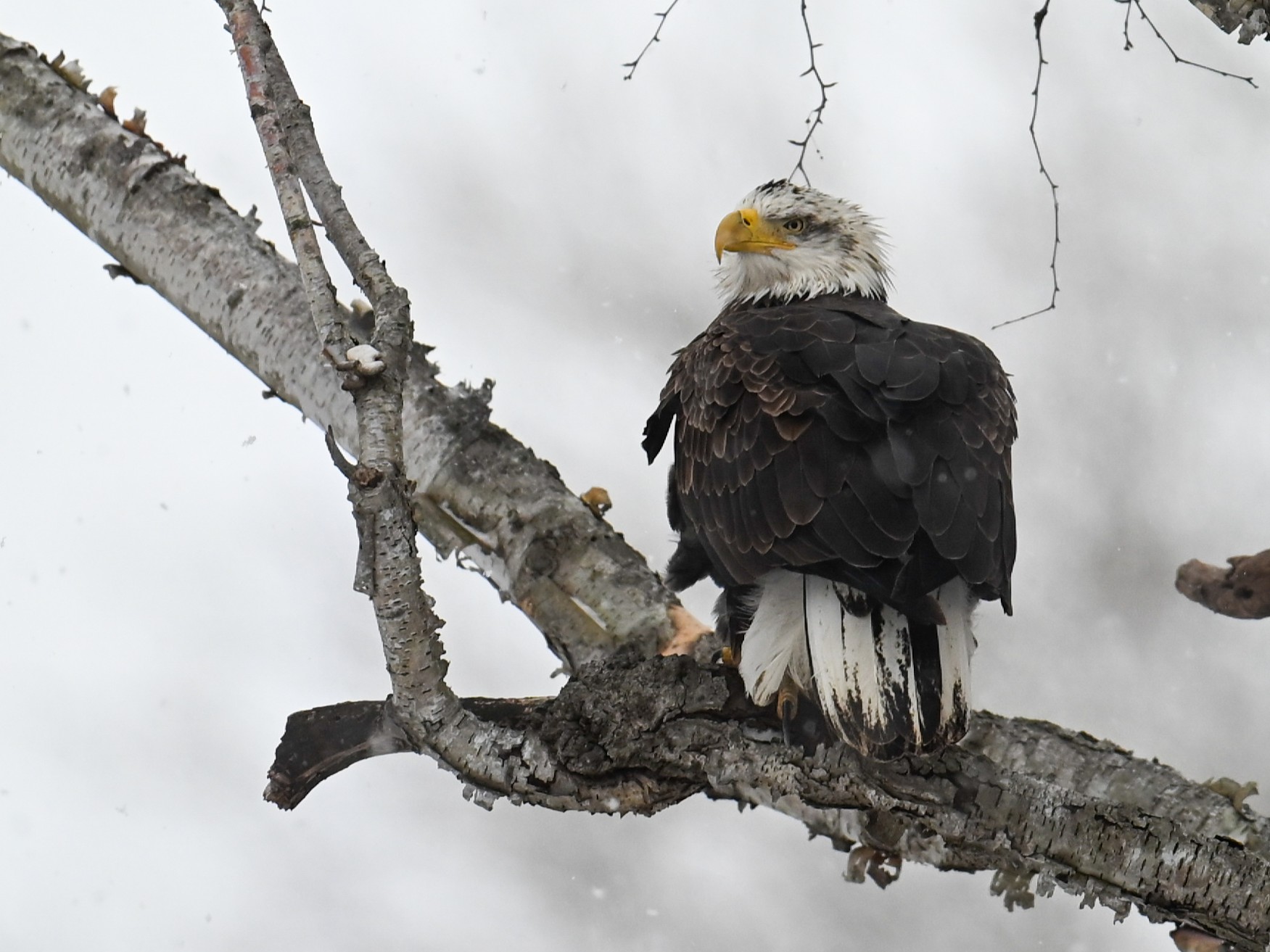
715 Bald Eagles Reported in Ohio During January Count
Article Presented By Hometown-Motors, Inc …
COLUMBUS, Ohio – A bald eagle midwinter citizen survey counted 715 bald eagles thanks to 391 separate reports from Jan. 7-21 in the Buckeye State, according to the Ohio Department of Natural Resources (ODNR) Division of Wildlife.
With the United States’ 250th anniversary year underway in 2026, the Division of Wildlife requested the public’s help in a midwinter survey to count the national bird. Over 15 days, the agency received observations of 592 adult and 123 immature eagles.
The Division of Wildlife thanks everyone who submitted an eagle sighting on the Wildlife Reporting System. The 10 counties with the most eagles reported:
- Delaware (26 eagles observed)
- Franklin (26)
- Erie (24)
- Lucas (20)
- Ross (20)
- Sandusky (20)
- Huron (18)
- Muskingum (18)
- Knox (17)
- Wood (16)
Ohio’s bald eagle population has dramatically increased in recent years. A 2025 bald eagle nest census found 964 active nests in Ohio, a significant increase from the 707 nests found during the 2020 nest census. Nests were counted in 87 of Ohio’s 88 counties in 2025.
January and February are excellent times to view America’s national bird in Ohio. Look for eagles near their preferred aquatic habitats such as rivers, wetlands, and lakes. The lack of foliage during the winter season helps in spotting them; courtship and nest building begins in January and February. Bald eagles in Ohio typically lay and incubate eggs in February and March, nesting in large trees such as sycamores, beeches, oaks, and cottonwoods.
Winter provides viewing opportunities for immature bald eagles as well as adults. The white head and tail of the adult bird contrasts sharply with its dark body, a distinctive feature used to identify the species. An immature bird is more difficult to identify and has a mottled brown and white plumage for four or five years before attaining the recognizable field marks of an adult. A good pair of binoculars or a spotting scope is recommended to spot birds at long distances.
Eagles can be spotted in all 88 Ohio counties. Lake Erie and other large waterbodies host the highest number of eagles because they provide easy access to food resources. Excellent viewing opportunities can be found at Magee Marsh Wildlife Area (Lucas and Ottawa counties, Pickerel Creek Wildlife Area (Sandusky County), Sheldon Marsh State Nature Preserve (Erie County), Mosquito Creek Wildlife Area (Trumbull County), and Killdeer Plains Wildlife Area (Wyandot and Marion counties). In southern Ohio, look near major rivers such as the Muskingum, Hocking, Scioto, and Great Miami.
Support bald eagles
As with many of Ohio’s native wildlife species, bald eagles require specific habitat conditions to thrive. Bald eagle habitat protection and research is funded by the sale of bald eagle conservation license plates, income tax donations to the Endangered Species and Wildlife Diversity Fund, and sales of the Ohio Wildlife Legacy Stamp. Similarly, revenue derived from hunting and fishing license sales helps the Division of Wildlife expand wildlife areas and manage habitats for eagles and other wildlife.
The bald eagle was once an endangered species, with only four nesting pairs in Ohio in 1979. Thanks to partnerships between the Division of Wildlife, Ohio zoos, wildlife rehabilitation facilities, concerned landowners, and conservationists, its population increased. After much hard work and continued conservation, the bald eagle was removed from the federal list of threatened and endangered species in 2007, and from Ohio’s list in 2012.
Bald eagles are protected under both state law and the federal Bald and Golden Eagle Protection Act, making it illegal to disturb bald eagles. When viewing these majestic birds, remember to respect the bird’s space and stay at least 100 yards away. Disturbing bald eagles at the nest site could lead the pair to abandon the eggs.
Bald eagle management by the Division of Wildlife includes habitat conservation with an emphasis on wetlands and wooded river corridors, working with rehabilitators who help injured birds, and enforcing state and federal protection.