




























Intersection Changes at State Route 772 and Blain Highway
Article presented by Tomlinson Insurance Agency …
CHILLICOTHE – The Ohio Department of Transportation (ODOT) is improving safety at select intersections statewide by converting standard, two-way stop intersections to all-way stop following examples in other states where the change brought improved safety.
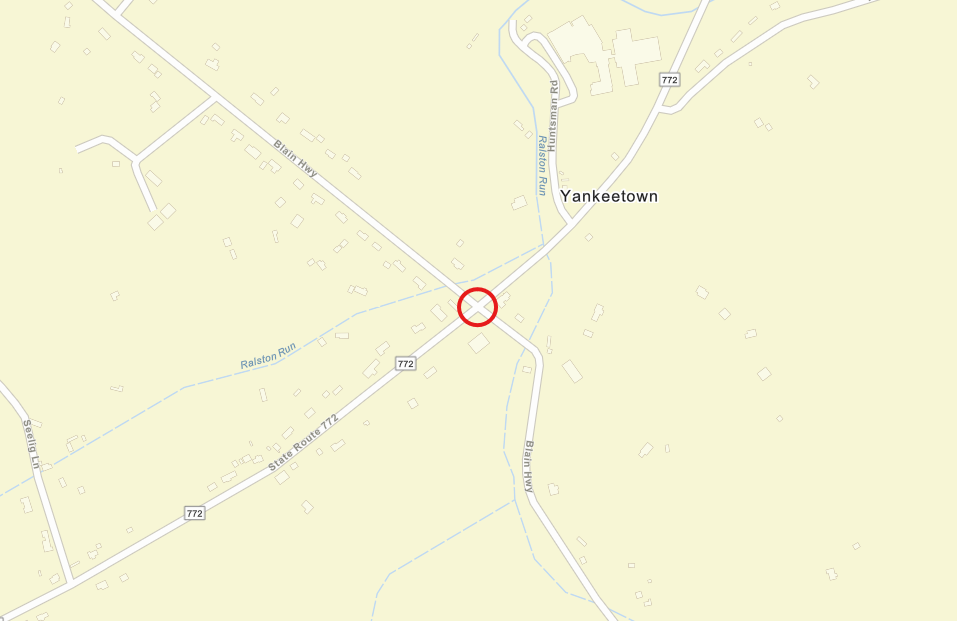
As part of this effort, work will begin during the week of June 15, 2026, to convert the intersection of State Route 772 and Blain Highway to an all-way stop. Currently, this intersection operates as a two-way stop requiring only traffic along Blain Hwy to stop before entering or crossing SR 772.
A safety study of the intersection was conducted in 2025. The study found 15 total crashes between 2020-2025. Of the 15 total crashes, 8 of them were angle crashes. As a result, ODOT will convert the intersection to an all-way stop in order to improve safety at the intersection.
Motorists will be alerted to upcoming changes through signage posted along SR 772 and Blain Highway. ODOT will continue to monitor the intersection to ensure the all-way stop is operating as intended.
Since 2018, the state of North Carolina converted over 500 intersections from a typical two-way to all-way stop control. Their analysis of 348 of these locations showed a 100% reduction in fatal crashes and 95% reduction in serious injury crashes. Similar results were also seen in the state of Delaware.
In Ohio, 77 intersections statewide were evaluated and chosen for conversion to an all-way stop. Implementation will occur within the next two years. The locations selected for conversion are where crash data found the most common type of crash was the result of a failure to stop or a failure to yield to cross-traffic that was not required to stop.